
Book Online

High Blood Pressure Causes and Treatment

A common condition affecting many people is high blood pressure (hypertension), when the long-term force of blood against your artery walls remains sufficiently high to cause health problems like heart disease eventually. The blood pressure determination occurs by the quantity of blood your heart pumps and the resistance it encounters to the blood flow from your arteries. If you have narrowed arteries and your heart pumps sufficient blood, you become a victim of high blood pressure.

When you have high blood pressure, also called hypertension, the force of blood pushing through your vessels remains too high consistently. This article looks at the basics of hypertension, including its causes and treatment.

What Precisely Is High Blood Pressure?

Narrow blood vessels also called arteries, cause resistance to blood flow. The narrow your arteries, the more resistant they are and the higher they push your blood pressure. Over time your high blood pressure causes health issues, including heart disease. High blood pressure or hypertension is a common issue, and most Americans deal with this problem.

Generally, hypertension doesn’t develop overnight and happens over several years. As a result, you may not have any symptoms of high blood pressure, but the condition continues to damage your blood vessels and organs like your heart, brain, eyes, and kidneys.

Detecting blood pressure early is essential, and getting regular readings can help you and your doctor observes changes. If your blood pressure is elevated, your doctor might recommend checking your blood pressure every few weeks to determine the numbers remain elevated or return to normal. Doctors also recommend prescription medications and healthy lifestyle changes to contain elevated high blood pressure. However, if your condition doesn’t receive any treatment, you could be heading towards health issues like heart attacks and strokes.

Understanding High Blood Pressure Readings

Two numbers are associated with the pressure readings, with the systolic pressure being on the top indicating stress in the arteries when your heart is pumping blood out. The bottom number is diastolic pressure indicating the tension in your arteries between the beating of your heart.

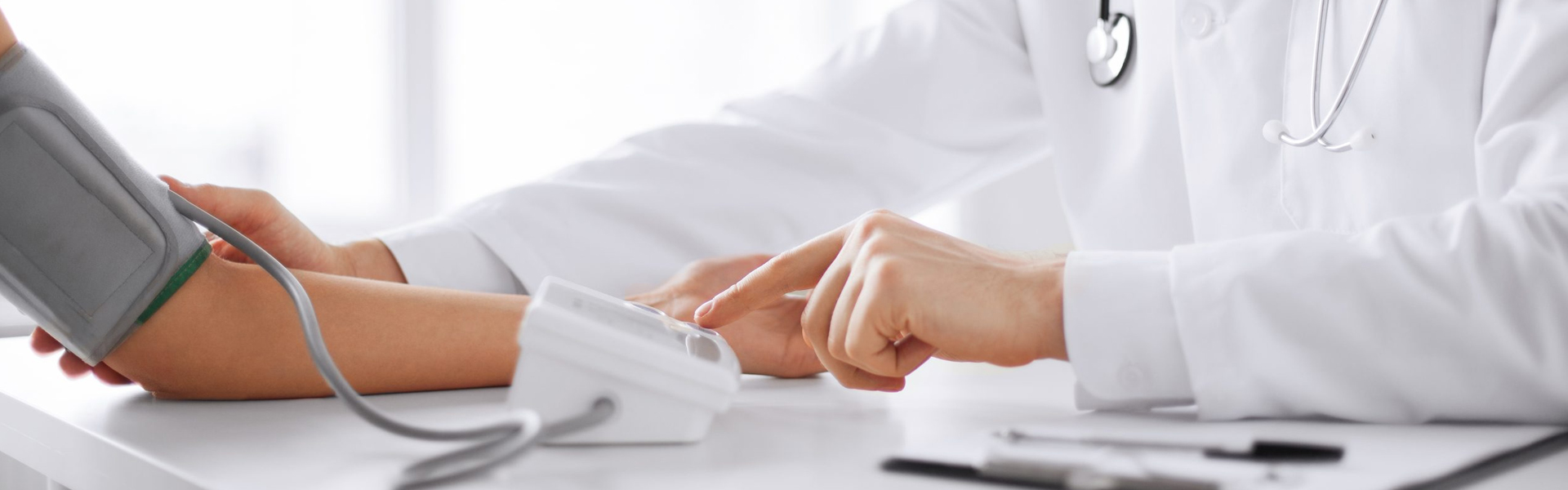
There are five types of high blood pressure readings for adults. They are healthy, elevated, stage I hypertension, stage II hypertension, and hypertensive crisis. Blood pressure readings are taken with a pressure cuff. It is essential to have a correctly fitting cuff to obtain accurate readings because ill-fitting deliver inaccurate results. In addition, children and teenagers have different blood pressure readings. Therefore if you need to monitor your child’s blood pressure, enquire about the healthy ranges for blood pressure with your child’s doctor.

Causes of High Blood Pressure

There are two types of high blood pressure affecting adults.

Primary Hypertension (Essential)

Identifiable causes of high blood pressure haven’t been discovered for adults. Primary high blood pressure, also called hypertension, develops gradually over several years.

Secondary Hypertension

Some people have underlying conditions leading to high blood pressure. Secondary hypertension appears suddenly to cause higher pressure than primary hypertension. You can develop secondary hypertension due to various conditions like obstructive sleep apnea, adrenal gland tumors, thyroid issues, kidney disease, congenital issues, and illegal drugs.

Treatment Available for High Blood Pressure

Different factors allow the doctor providing high blood pressure treatment in Germantown to determine the best suited happy for you depending on the type of hypertension you have and the causes identified.

If you have primary hypertension, you receive help by changing your lifestyle to reduce your high blood pressure. You may obtain a medication prescription if lifestyle changes aren’t sufficient or ineffective.

If you have secondary hypertension, an underlying problem is causing the issue. In such cases, your treatment will focus on treating the underlying causes. For example, if your secondary hypertension results from medications for the underlying problem, Dr. Lakhvinder Wadhwa recommends other medicines that don’t have side effects.

Hypertension is persistent despite treatment provided for its underlying cause. In such cases, your doctor works with you to develop lifestyle changes and prescribes medications to reduce your high blood pressure. Treatment plans for hypertension are evolving, and if a drug proved effective for you initially, it might become less effective over time. Therefore your doctor continues working with you to refine your treatment.

You can also try lifestyle tips and home remedies to lower your risk of hypertension. However, it helps if you remain in touch with your doctor at Germantown Primary HealthCare to stay in optimal shape and control your high blood pressure.


Sleep Care Disorders Successfully Treated When Correctly Diagnosed

Are you aware getting sufficient sleep is scientifically proven as improving every area of our lives, including increasing productivity and cognitive function? After a good night’s sleep, you feel more energetic when playing with your kids and have an overall happier and calmer mood all day.

Find it challenging to believe us? A comprehensive study conducted in Finland in 2007 revealed sleep-deprived people had reduced reaction time coupled with the inability to pay attention. The participants also had challenges with both short-term and long-term memory and critical thinking because they were managing with just five hours of sleep.

How Much Sleep Is Essential Every Night?

Seven to Nine hours of sleep for young adults and adults is recommended by the National sleep foundation. At the same time, the foundation recommends seven to eight hours of sleep every night for seniors. To understand whether you are on the longer or shorter end of the spectrum, you can see how long you sleep without an alarm. For example, if you wake up after seven hours, the number is adequate for you on most occasions.

How To Determine Whether You Are Getting Quality Sleep?

Trying to determine whether you are getting quality sleep is at best challenging and difficult to manage. However, you can either do an audit of your sleep hygiene or contact Germantown’s primary care physicians for help. Obtaining professional service to determine whether you are getting sufficient quality sleep gives you a professional assessment of your condition. In addition, it helps decide whether or not you are affected by conditions like insomnia, teeth grinding, snoring, narcolepsy, et cetera.

The Germantown physicians create a sleep care plan specifically for you by diagnosing and treating all sleep disorders in adults. When you contact this facility, you are accessing care from board-certified sleep specialists accredited by the American Academy of sleep medicine. The primary healthcare facility uses state-of-the-art technology along with a team of medical specialists, psychologists, and registered sleep medicine specialists, devoting their careers to sleep study and treatment of sleep disorders.

When Must You Seek a Sleep Care Plan from the Specialists?

If you experience an occasional night of interrupted sleep because of stress or other causes, the condition is normal and occurs with everyone. However, if you are persistently struggling to achieve quality sleep for over 30 days, you must consider the problem as severe and seek treatment for the condition as soon as possible.

Do not assume a physical exam or a discussion with the professionals at the facility is all that is required to overcome the problem you experience. You also have to undergo various tests with sleep care products to identify the reasons for your restlessness and the lack of quality sleep. You are either required to undergo a polysomnography test in a sleep clinic or a home sleep apnea test (HSAT) to determine whether sleep apnea is the cause of your restlessness.

The Treatment for Sleep Care

Dr. Lakhvinder Wadhwa offers a comprehensive sleep care program for adults, including the gold standard CPAP therapy, sleep tips, sleep studies, et cetera to ensure the disorder affecting you is effectively treated.

The experienced team of professionals from primary care physician Germantown, MD, will work with you to analyze your sleeping patterns by examining them to uncover the underlying cause and develop a personalized treatment plan specifically suited to your condition.

Before determining a practical course of action, the professionals initially consult with you and perform sleep study tests at an observational sleep center. The studies are essential to determine the underlying causes of your condition and develop the most effective treatment to relieve you from the problem affecting you.

Sleep disorders are familiar in the United States, with nearly 33 percent of Americans reporting they have trouble falling asleep or staying asleep. The lack of sleep doesn’t just affect the overall quality of life of the affected individual but also makes it challenging for them to perform everyday activities like going to work or school, operating machinery on motor vehicles because it makes them susceptible to accidents.

The lack of sleep also affects the overall health of people by making them susceptible to various health disorders such as hypertension, strokes, heart disease, cardiovascular issues, and others. Therefore, sleep disorders are better not ignored as a minor issue. Instead, they can assume significant proportions unless identified and treated in time by obtaining a sleep care plan from the specialists.

Diabetes: Symptoms, Diagnosis, Treatment, and Prevention

Among the common chronic health conditionsis diabetes. Diabetes is a metabolic condition that affects your blood sugar levels. Insulin hormone in your body helps in the conversion of blood sugars to energy. When you have diabetes mellitus, your body is incapable of making enough insulin or utilize the available one.

Chronic diabetes mellitus has no cure. However, your doctor can recommend management techniques to reduce the risk of complications. Some of the complication associated with diabetes include:

  • Loss of vision
  • Acute or chronic kidney failure
  • Nerve damage

There are two common types of diabetes, which include:

  • Type 1 diabetes, which is associated with a lack of insulin production due to damage pancreatic cells
  • Type 2 diabetes, which occurs when your body becomes resistant to insulin, causing sugar build up in your blood

Other types of diabetes include prediabetes and gestational diabetes. Prediabetes is similar to type 2 diabetes. However, the blood sugar levels are not as high as in type 2 diabetes. On the other hand, gestational diabetes is a condition that occurs during pregnancy. The placenta can produce insulin-blocking hormones, causing this type of diabetes mellitus.

Signs and Symptoms

Signs and symptoms can vary between women and men. However, there are common signs of diabetes mellitus in both genders, which include:

  • Loss of weight
  • Frequent urination
  • Increase in hunger and thirst
  • Sores that take long or don’t heal
  • Fatigue and general body weakness
  • Blurry vision

Men with diabetes might have erectile dysfunction, low sex drive, and poor muscle strength. On the other hand, women with diabetes might portray symptoms such as dry and itchy skin, urinary tract, and yeast infections.  In case you experience such symptoms, you can contact any of our primary care physicians at 20874.

Signs and Symptoms

For effective diabetes mellitus management, your doctor will recommend diagnostics. During the diabetes diagnostics, the physician can review your family’s diabetic history and the warning signs. To confirm the diagnosis, your doctor might recommend the following tests:

  • Glucose screening test
  • Random blood test
  • Fasting blood sugar test
  • Glucose tolerance test

Diabetes Mellitus Management

Diabetes mellitus treatment guidelines vary depending on the type. However, most treatments for diabetes are medications. Diabetes medications can be oral or injections.

Type 1 Diabetes

After diagnosing type 1 diabetes, your doctor will recommend insulin. Insulin will replace the hormone that the body can’t produce.

However, there are four types of insulin, depending on the period of action. Below are the four different types of insulin:

  • Rapid-acting insulin. This type of insulin works in fifteen minutes, and its effects can last up to three hours.
  • Short-acting insulin. The short-acting insulin acts in 30 minutes and stays for 6-8 hours.
  • Intermediateacting insulin. It starts working after two or three hours. However, the insulin can last for 12-18 hours in your body.
  • Long-acting insulin.  When you use such a type of insulin, it takes a few hours to start working. However, the effects of long-acting insulin can last a whole day or more.

Type 2 Diabetes

To treat non-insulin-dependent diabetes, our Germantown primary care physicians can recommend diet and lifestyle changes. Regular exercise can help in the consumption of glucose to produce energy and prevent type 2 diabetes complications.

If lifestyle and diet changes don’t work, your doctor might recommend medications. There are several types of diabetes medications. Therefore, you might need to take more than one type of medication. However, some type 2 diabetes patients can use insulin.  For prediabetes and gestational diabetes, you can make lifestyle and diet changes.

Diabetes Prevention

Type 1 diabetes is unpreventable since it is an autoimmune condition. Also, you might not have control over type 2 diabetes since some of the causes are genes and age. However, if you have prediabetes, you can prevent type 2 diabetes.

In our primary care clinic, we believe in prevention than cure. Therefore, Dr. Lakhvinder Wadhwa recommends the following to prevent type 2 diabetes if you already have prediabetes.

  • Physical exercise for at least 150 minutes every week
  • Cut refined, trans, and refined fats out of your diet
  • Increase fruits and vegetables in your diet
  • Consume your food in small portions
  • Lose some of your bodyweight if you are obese or overweight

For more guidelines on the prevention and management of diabetes mellitus, you can visit us at Germantown Primary Health Care.

How Lifestyle Changes Can Aid in Your Weight Loss

Losing weight can improve your overall health and minimize the risk of having certain conditions. Diabetes, heart disease, and obesity are linked with weight gain, and your physician can enlighten you on how to lose weight naturally. Changes to your diet, lifestyle, and exercise are vital aspects of weight management.

Diet Plan for Weight Loss

Intake of a low-calorie diet is ideal for weight loss. Dr. Lakhvinder Wadhwa recommends you take high fiber foods, lean meat, fruits, and vegetables. Processed and sugary foods have a high level of calories. Remaining hydrated and taking a balanced diet ensures that your body cells work at optimal levels. Eating more calories than your body requires may lead to the formation of body fats. You can burn calories by remaining proactive in physical exercises and embracing an ideal dietary lifestyle. Other weight loss-friendly foods may include:

  • Legumes and beans
  • Tuna and salmon
  • Boiled potatoes
  • Chicken breast and lean beef
  • Cruciferous and fresh vegetables
  • Leafy greens

Your nutritionist may recommend you adopt various tips to improve your dietary lifestyle. Some of the nutritional guidance you should follow may include:

  • Drinking adequate fluids that have low-calorie and are unsweetened
  • Avoid fatty diet and processed foods
  • Intake of whole foods, including whole grains, dairy and lean meat products.
  • Eat when hungry and avoid skipping meals, which may compel you to overeat during the next meal or lead to poor food choices.

Your body takes time to absorb food, and you should regulate the intervals of food intake. It’s crucial to make periodic BMI checks to ensure your body cells function optimally and your weight is ideal.

Engaging in Physical Exercises

Routine physical exercises aid in keeping your body fit, and it’s vital for your mental health. Frequent physical activities are crucial in achieving successful weight loss. A moderate to intense physical activity regularly is ideal for weight loss. If you don’t engage in physical exercises, you can gradually start and increase its intensity with time. Remaining physically proactive is a sustainable approach in regulating our weight.

Your primary care physician near you may help keep track of your physical exercises to balance calorie levels. You can also check on your diet to balance the intake of calories and remain with optimal weight. Some of the weight-loss management tools that can track your progress include:

  • A body-mass index calculator
  • Food journal
  • Measuring tape or scale
  • An application to record your physical exercise and diet

Your therapist can determine an ideal weight loss plan for you and ensure you achieve your desired body weight within a specified time. Losing weight is not easy, but you need to have a positive mindset and concentration. Your physician can also teach you how to lose weight fast.

Vital Weight Loss Tips

Are you wondering whether there are tips on how to lose weight fast? Your therapist can provide you with vital approaches for weight loss, and some include:

  • Drink water before meals since it reduces intake level. Remaining hydrated ensures that your body systems function optimally.
  • Intake of caffeine boosts your metabolism.
  • Take soluble fiber-rich foods that promote weight loss
  • Avoid sugary beverage that may add calories to your body
  • Get enough sleep since poor sleep is a risk factor for weight gain
  • Opt for weight loss-friendly foods
  • Eat healthier whole foods that are preferable for optimal weight than processed foods.

Successful weight loss can be achieved by the intake of fewer calories and a lifestyle that fosters the reduction of calories in your body. At Germantown Primary HealthCare, we enlighten you on losing weight naturally by adopting a suitable dietary lifestyle and being physically active. An ideal weight loss program offers health benefits by minimizing your body mass within a short time frame. You can achieve your weight goals by reducing the calorie intake regularly and following all the guidelines provided by your nutritionist.

A weight maintenance program involves healthy eating and regular exercises to avoid regaining weight. If you have a high BMI with no obesity health issues, your physician may recommend taking weight loss medication. The medications are a viable option to support your lifestyle modifications if the other weight loss programs are unsuccessful. It’s essential to seek your specialist on the ideal diet plan for weight loss and suitable lifestyle changes.

Call Now Book Online